Decoding the Use of Force Continuum in Policing: Use of Force Explained


Use of Force: What It Actually Looks Like
When I first got into law enforcement, one thing became obvious pretty quickly. What the public thinks “use of force” is and what it actually is are two completely different things.
Most people hear the term and jump straight to the extreme. Fights. Tasers. Shootings. That’s where their mind goes. In reality, most use of force situations never even get close to that. Most of it starts, and ends, with presence and communication.
Before any of that even matters though, there’s one case that controls everything we do in these situations: Graham v. Connor.
That case set the standard we operate under. Not public opinion. Not hindsight. Not slowed-down body cam clips. The standard is whether the officer’s actions were objectively reasonable based on what they knew at that moment. Not five minutes later. Not after a full investigation. Right then, with what they had.
That matters more than anything else in this conversation.
The “Use of Force Scale” vs. Reality
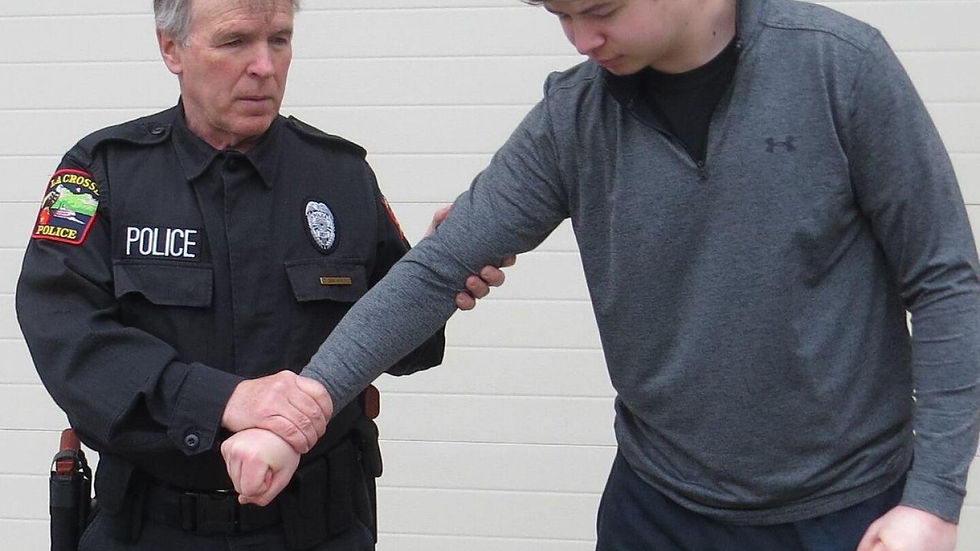
Departments love the term “use of force continuum.” It sounds clean. Structured. Like you just move from one step to the next in a neat order. That’s not how it works in real life.
It’s better understood as a scale. Something that moves up or down depending on what’s happening in front of you. You don’t start at the bottom and politely work your way up every time. You match the level of force to the level of threat. Immediately.
Sometimes just showing up in uniform is enough. People calm down, comply, and the situation ends before it ever starts. Other times, you’re giving commands that are ignored from the second you open your mouth. And sometimes, the situation skips everything and goes straight to a serious threat in a matter of seconds.
That unpredictability is what people on the outside don’t fully grasp.
What It Looks Like in Plain Terms

At its core, use of force is simple, even if the situations aren’t.
If someone complies, there’s no force. If they resist, you introduce control. If they become a threat, the level of force increases to deal with that threat. That’s it.
It’s not about punishment. It’s not about ego. It’s about gaining control of a situation safely and as quickly as possible. The longer something drags out, the more dangerous it becomes for everyone involved.
The mistake people make is thinking officers are required to exhaust every lower level of force before moving up. The standard is reasonableness. If a threat justifies a higher level of force right now, that’s where it goes.
That’s straight out of Graham v. Connor.
What It Looks Like on the Street
I’ve been on calls that never went past a conversation. You show up, separate people, talk it down, and you’re clearing the call ten minutes later. No force, no issues.
I’ve also been on calls where it shifts fast. Way faster than people expect.
You can be standing there talking to someone who’s agitated but manageable, and then something changes. It’s usually subtle at first. Tone changes. Body language tightens. They stop listening. Their hands start moving in ways you don’t like. Maybe they square up. Maybe they start looking around like they’re planning something.
That’s the moment everything speeds up.
You’re not thinking about a diagram or a policy chart. You’re reading a person in real time and trying to stay ahead of whatever they’re about to do. If verbal commands aren’t working and the situation is moving toward physical resistance or worse, you go hands-on. Not because you want to, but because waiting longer usually makes it worse.
I’ve had situations where going hands-on early prevented something from turning into a fight. From the outside, that might look aggressive. In reality, it’s controlled and intentional. It’s stopping the escalation before it gets there.
That’s the part most people never see or understand.
Where the Disconnect Happens
A lot of the criticism around use of force comes from viewing incidents after the fact. Slowed down. Replayed. Picked apart frame by frame.
In real time, none of that exists.
You’re making decisions in seconds, sometimes less. You don’t know everything. You don’t get a full backstory. You don’t get to pause and think it over. You’re reacting to what’s in front of you, based on your training and experience, and trying to keep control of a situation that can change without warning.
That’s why the standard is reasonableness in the moment, not perfection in hindsight.
Why This Actually Matters
Understanding how force works isn’t just for officers. It matters for the public too.
If people understand that compliance usually keeps situations at the lowest level, a lot of these encounters never escalate. If people understand that sudden movements, ignoring commands, or becoming physically resistant changes how an officer has to respond, there’s less confusion about why things play out the way they do.
At the same time, officers are expected to stay within the law and justify their actions. That’s where Graham v. Connor comes back in. Every use of force is judged against that standard. If it’s not reasonable, it doesn’t hold up.
The Bottom Line
The idea of a clean, step-by-step “continuum” sounds good on paper, but it doesn’t reflect reality. Real situations are messy, fast, and unpredictable.
Use of force is about control, timing, and judgment. It’s about reading a situation and responding to it before it gets out of hand. And at the end of the day, every decision comes back to one question:
Was it reasonable for that moment?
That’s the standard and That’s the job.


Comments